• Skip to main content
  • Skip to primary sidebar

Newton Schools

School Consultants in India

  • About Us
  • New Age Schools
    • The Need
    • The Difference
    • Creating new schools
  • Services
    • School Consultants
    • Detailed Project Report
    • School Design
      • Design Planning
      • Site Selection and Evaluation
      • Architectural Design & Drawings
    • School Construction
      • Civil Construction
      • Interiors Execution
      • Turnkey Project Management
      • School Renovation
    • School Operations
      • Outsourced School Operations
      • Safety & Security
      • School Supplies
      • Day to Day Operations
      • Recruitment & Placement
      • Training & Development
      • Workshops & Seminars
    • Change Management
      • Change Strategy
      • Gap Analysis
    • Marketing for Schools
      • School Admissions
      • Advertising & Marketing
      • Branding & Rebranding
      • PR & Media Coverage
    • International Collaboration
  • Blog
  • Projects
  • Contact Us
You are here: Home / Archives for Blog / Designing Schools

Designing Schools

11 Jun 2019 |

When to undertake a school feasibility study

school-project-reportWhen you have identified land for a school, it is a good idea to conduct a feasibility study. Setting up a school entails significant investments, if these decisions can be informed with professional advice, they should be taken up. As in any business, the school project report investigates the viability of a prospective school venture and alternatives available. It takes into account the pros and cons of undertaking the project, at an early stage.

A feasibility study should be undertaken to explore potential stakeholders, understand market dynamics and possible outcomes. It establishes competition landscape, an evaluation of potential student density, the factors that do (or do not) appeal to parents and students, the nature of schools they seek, factors critical to parent decision making. 

The report explores the challenges in setting up the school. The local factors that shape the nature of a school. Often the administrative requirements, the local governance requirements can shape capital requirements. e.g. a change in fire safety policy can mean significant changes in the school plan. So the feasibility study must also have an ear to the ground in expected policy shifts and trends in education.

Setting up the physical infrastructure is only the beginning. If the report does not consider the willingness of talent to work out of the location then the investor is in for a rude awakening when it comes to making it operational. Other operational challenges are the availability of resources, the impact on cost, the accessibility of ancillary services. All of these impact the viability of a school. e.g. health services should be easily accessible with a workable emergency response procedure. 

Perhaps an important question is WHEN should a feasibility study be conducted. A feasibility study may seem like an expense that can be avoided. However, it is due diligence one must undertake at the onset of any project. Not performing one can lead to expensive quagmires. 

“Begin at the Beginning,” when you have identified a school as your area of interest and have the general location that you  prefer, the feasibility study should be commissioned or undertaken immediately. While it can also be undertaken if you are already in possession of the land or building, the ideal time is when you have not yet invested any significant capital.

The study should leave you with an understanding of the possibilities and micro-dynamics of the school, perhaps even other alternatives you could explore, backed by sufficient investigation and research to support decision making.

The report must not be considered as an execution plan of the project, it is a decision enabler for project initiation only. The conclusions or results of the study outlines all the conditions examined, followed by strengths and implications. In some cases, there might not be a clear outcome. And these implications can be affected by a change in market forces or policy shifts. It is important to understand that as a study it must consider positive and negative influences in the environment. It is up to the investor to make good of it, to assess the trade-off and the rewards of moving forward with the  project. 

When we conduct a feasibility study, we clearly establish lay of the land, the viability of the project, challenges and alternatives. You are then in a position to take an informed and considered decision.


Filed Under: Designing Schools, Future Schools | Tagged With: feasibility report, school feasibility report, school project, school project report, school report

10 Jun 2019 |

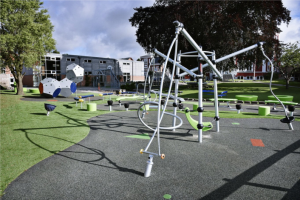
Designing active play areas in schools

Across the world, physical activity among children is decreasing. Indian cities in particular do not promote active lifestyles because of the high population density, infrastructure limitations, pollution and the climate.

kompan-playgroundPhysical activity is an important contributor to the health of a community. In fact, physical inactivity is identified by the WHO as the fourth leading risk factor for global mortality with major implications for the prevalence of noncommunicable diseases (NCDs) and the general health of the population. Often one fails to realise the benefits of active living, especially when increasing work demands make it difficult to take time out for exercise. By the time one is forced to set that time aside the lifestyle related ailments have already surfaced. At such a point a lot of effort is required to change one’s lifestyle and make physical activity part of our regimen. Habits are acquired over time, perhaps best inculcated early in life. Urban environments in India  are generally ill suited to facilitate such healthy lifestyles. For someone to be naturally inclined towards active living, such habits need to be acquired early on in life.

Across the world, physical activity among children is decreasing. Indian cities in particular do not promote active lifestyles because of the high population density, infrastructure limitations, pollution and the climate. WHO recommends a minimum of one hour a day of moderate to vigorous physical activity for children and young people. This is important to stay physically fit and to avoid lifestyle diseases such as diabetes and cardiovascular ones. By enabling children to enjoy active lifestyles, through play, we promote healthy living among them. Opportunities and right to play will ensure they grow up to be healthy adults.

Children enjoy being active, all they require are well-equipped play areas accessible at the right place. Anyone who has seen a toddler explore a jungle gym will understand how free play activity enhances skill development among children. They push their limits all the while observing others do the same. All this without competition or instruction. And children learn to play with each other, building social skills.

Children are active without structured physical training sessions. They are able to explore their environment, their creativity and their social skills. Research has shown that play can lead to physical, social, emotional and cognitive benefits for children

The UN’s  Convention on the Rights of the Child states that children have the right to play. Schools play an integral role in creating the atmosphere that promotes active play among children. To meet their commitment towards child developmental milestones, schools must make a concerted effort to provide such an environment.

Global Recommendations on Physical Activity for Health (WHO)

https://www.who.int/dietphysicalactivity/global-PA-recs-2010.pdf


Age group: 5–17 years old

For children and young people of this age group physical activity includes play, games, sports, transportation, recreation, physical education or planned exercise, in the context of family, school, and community activities. In order to improve cardiorespiratory and muscular fitness, bone health, cardiovascular and metabolic health biomarkers and reduced symptoms of anxiety and depression, the following are recommended:


1. Children and young people aged 5–17 years old should accumulate at least 60 minutes  of moderate- to vigorous-intensity physical activity daily.


2. Physical activity of amounts greater than 60 minutes daily will provide additional health benefits.


3. Most of daily physical activity should be aerobic. Vigorous-intensity activities should be incorporated, including those that strengthen muscle and bone,  at least 3 times per week.

Nature of play areas recommended:

Accessible

We recommend having defined play areas in locations easily accessible by the target children’s group. They should be easily able to access it in recess times, or other free times. The school timetable should be designed to allow children to spend time in these areas. Off course, other considerations that need to be factored in are the climatic conditions, too much sun in the summer? Sufficient shaded areas, for it to be a viable playing area.

Age appropriate

For each developmental stage, activities that contribute to the development of physical, emotional, social, cognitive and creative skills in children vary. While formal sports are a good way to inculcate such learning, it is often through unstructured play that some early developmental skills are honed by children. Free play areas where children expend energy and develop motor skills, build bone & muscle strength and cardio are some examples of play contributing to development in early education. Defined areas must be age appropriate with a varied range of activities to meet the requirements of each age group.

Children learn to play together, interact with their peers, develop teamwork, competitiveness empathy and more through play activities. The joy of free play is a fundamental experience to a child. Schools must respect this by creating appropriate spaces.

Community

For children to desire to play, the play area needs to be designed to draw out their interests. If the activities in the play area are easy, the children will soon master them and get bored with them. Activities that are too difficult will lead them to give up and look for something else. For each age group, there need to be multi-play areas that require a variety of challenges calibrated to be progressively more difficult.

 “Well designed playgrounds can provide stimulus to social, emotional, cognitive and creative growth. This besides the physical growth, of course”,says Vinay Bhatt, Business Development Director of Kompan, the world’s largest play equipment manufacturers.

The design of the space needs a strong creative element, something that inspires children to devise games of their own, to allow them to play individually and together, to create that urge to spend more time.

Themed play areas that are also physically challenging can be designed to require active thought and collaboration. Perhaps an area that blends in with its surroundings, is bright and colourful and builds a sense of community.

Quality & Safety

At no point must one compromise on the quality of the play area. This means creating a robust product that is designed to withstand the climate and regular use. While it must be durable, it must also have a regular service and maintenance schedule.

There is increasing awareness in creating child-friendly school environments, the same needs to be applied in designing the play areas. For example, in a basic fun station, in addition to the movable parts being well anchored, and no sharp edges, care must be taken that all materials are non-toxic.

We are trying to create a healthy system for our children so sustainability and eco-friendliness of the process and product should also be in our consideration set. After all, these efforts will lead to a better world for our children.

Filed Under: Designing Schools, Future Schools | Tagged With: kompan, lets play, play areas in schools, play equipment, school playgrounds

5 Apr 2018 |

Creating Innovative Schools

Private schools in India have mushroomed over time, there are too many of them in some cities. We are seeing a scenario where parents have a choice and are now bargaining for better deals in newly launched private schools across most towns and cities. A school in Gurgaon recently shut down – it was barely 3 years old – but could not sustain the expenses and operations costs. In such a situation, how do new schools survive and how do those who want to continue investing in education make sure it is more than just sustainable? The answer lies in one word – innovation.

Most private schools invest heavily in creating impressive infrastructure but at the end, they are quite similar to each other. Innovation in some key areas lead to differentiators making them great schools of the 21st century. Here are some ways in which this can be done:

1. The Concept

Until this point of time, learning was closely associated with rote, not with problem solving. Our current teaching methodologies are to prepare rule-based followers, not innovators or trailblazers. Innovative schools that test new pedagogies to create problems solvers of the future are required. It is by collectively working on real-life solutions to common problems, that students develop higher order thinking skills; they also learn to collaborate and develop creativity.  Schools that offer 21st century practices such as project based learning, experiential learning and design thinking will be the sought-after schools of tomorrow. The delivery of the curriculum must be through these practices.

2. Architecture & Design

The role of architecture and design in our daily lives is often understated. Current schools are functional blocks of cement where students can assemble at fixed times to be recipients of a one-way flow of information from teachers. Paying a premium for an innovative design may not seem worthwhile for an investor, but if one is looking for a true 21st century school then they must look to experienced architects. Worldwide innovation in building design is also visible in schools, there are several internationally recognized architects who also understand 21st century educational practices.  The extra investments can go a long way in creating an institution instead of a building with rooms.

3. International Partnerships

Across the world, there is a lot of future defining work occurring. The innovators are keen to test their learnings in new environments and to validate them. We are living in a connected world, there is no reason why one should not look outward for new methods or learnings. In this age of collaboration if one can exhibit the vision to look in to the future, there are several experts willing to collaborate to create that future. Besides creation, collaborations are also very useful for operational schools, providing a great exposure to students and teachers. We strongly advise our clients to look worldwide for school design, pedagogy, curriculum, partnerships etc. and the results have been very fruitful.

4. Teacher Development

One can hire good teachers but if we are to modernise schools, their skills also need to be updated. From the traditional one-way discourse, as we shift to project based or experiential learning, the ideation and problem-solving needs to move to the students. The teachers must become enablers and co-learners. In the new project-based learning approach, it is found students who have identified the problem are much more motivated and engaged in solving them. They explore multiple disciplines solving them. Besides guiding them, teachers must also engage with the students in helping them analyse and assess. They must discuss their assignments, help them assess their goals, milestones and outcomes. Assessment models also need to change, teachers must enable students to assess their abilities themselves, in their groups and as co-teachers. This multi-pronged assessment leads to better understanding of their ability and their learning requirements. Institutions must invest in a regular program for teacher training, whether internally or through external experts.

5. Branding and Marketing

A successful school will be one that creates good citizens, ones who will contribute to a better world. A successful school is also one that will attract a wide range of talent from bright students to skilled teachers, and other international collaborators. Other institutions will want to be associated with it, to exchange ideas and learning. The traditional approach to marketing must change. That its endeavors and outcomes reach relevant forums at appropriate times with an effective marketing strategy, that it contributes to the public discourse shaping education for the future. A 21st century citizen receives information in a multitude of forms 24 x 7. To make a mark, the school must break through the clutter, ensuring that its brand imagery fits its vision. A school must invest in marketing itself, seeking out experts to do it effectively.

In this age of innovation, communication and creativity, it is only by investing in each of the above strategies that one can create a successful school.

At Newton Schools, we have been pushing the boundaries in each of these areas for school projects we undertake. In line with our advice, we also actively seek out collaborations that can provide better solutions to our clients, leading to better outcomes.

Filed Under: Designing Schools | Tagged With: Creating Innovative Schools

  • « Go to Previous Page
  • Page 1
  • Page 2
  • Page 3
  • Page 4

Primary Sidebar

The Newton Schools Blog

With over 25 years of working with schools, Newton has gained substantial insights into every aspect of planning, creating and operating schools - be it a preschool, a large boarding school or a innovative K-12 school in a city. We would like to share these insights and our experience with edu-entrpreneurs, educators and all our partners.

Signup for the NS Blog

Loading

Search

Contact Us


Phone

+91 87663 05479

Email

mail [at] newtonschools.in

About Us

As consultants for school projects in India, Newton Schools is focused on perfecting learning environments and creating amazing schools for children. We have executed several greenfield school projects end-to-end. We are based in Gurugram, India – the new city that has seen a large number of progressive and innovative new schools constructed over the past 15 years.

Know More

Quick Links

Home
About Us
The need for 21st century schools
Creating new schools
School consultants
Projects Executed

Signup for the Newton Schools Blog

The NS Blog offers insights gained over the past 25 years in planning, creating and operating schools. Signup for free here:

Loading

· Copyright © 2026 · NEWTON SCHOOLS Our Businesses: · NEWTON SERVICES